
The Analog Gap: The Fundamental Weakness in Digital Credentials
Every digital credential system faces the same challenge - proving the right person is in control
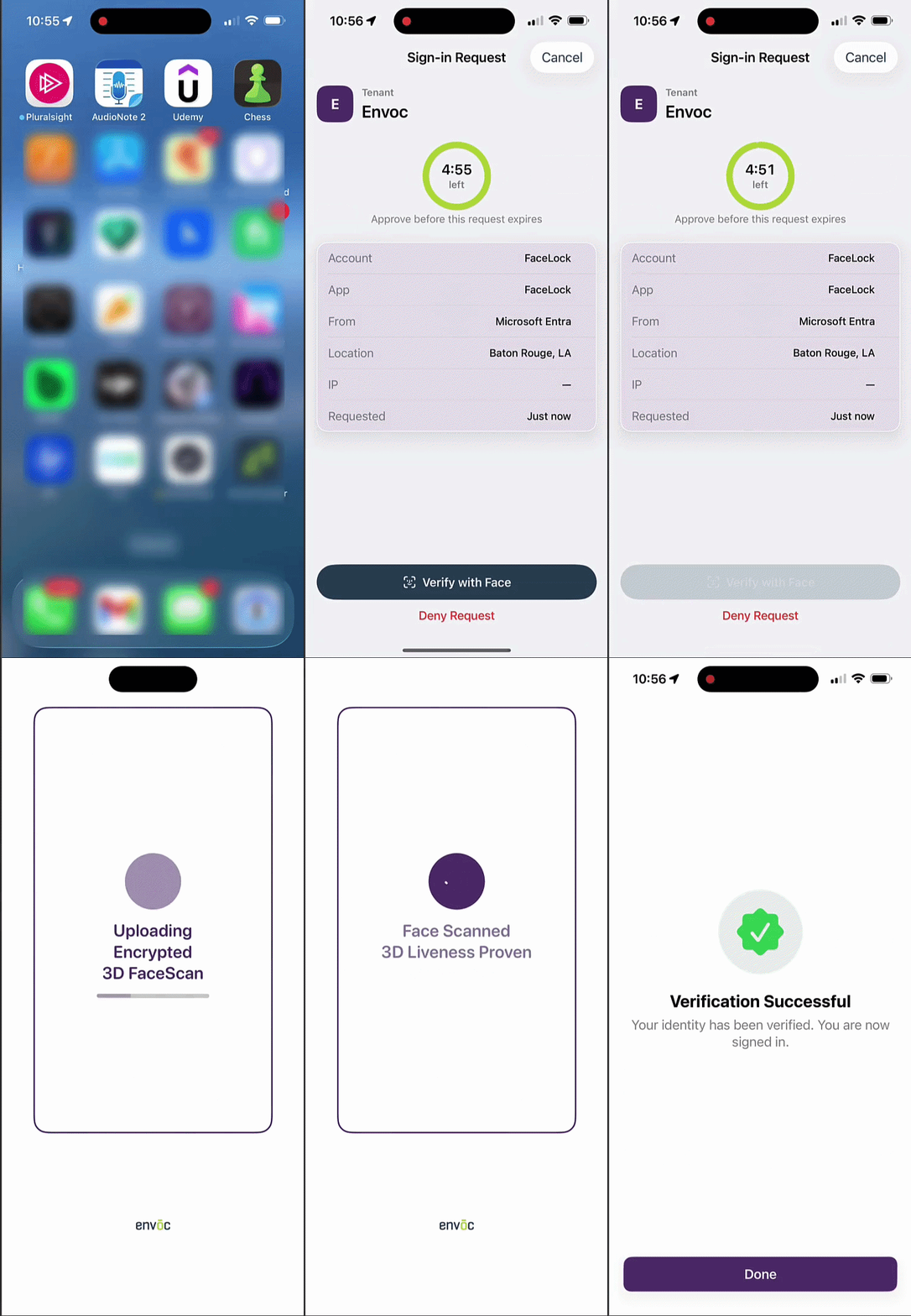
FaceLock Authenticator
Available on


Apple and the Apple logo are trademarks of Apple Inc., registered in the U.S. and other countries and regions. App Store is a service mark of Apple Inc. Google Play and the Google Play logo are trademarks of Google LLC.
The Problem
Traditional credential systems verify that certificates are valid, devices are authentic, and credentials haven't been revoked. But they cannot prove that the person presenting the credential is actually the legitimate holder.
We call this "the analog gap": the space between digital security and human verification. A credential can be cryptographically perfect and still fail if someone else gets hold of it.
Three Levels of Identity Verification
Not all verification is created equal. Traditional methods fall short of proving who you really are.
What You Know
Facts such as "I owned a Honda Accord in 2012." This approach requires collecting enormous amounts of personal data spanning 25–30 years—highly invasive and still easy for sophisticated fraudsters to spoof.
Example of the personal history, past addresses, vehicles, and associations that knowledge-based checks often require.
What You Have
Proving control of a device, email account, or SMS-capable phone. This only shows possession of something, not that you are the legitimate person. Hackers routinely compromise phones, accounts, and SIMs.
One-time codes sent to a phone. Anyone with access to the device (or via SIM swap) can receive them.
Who You Are
Biometric liveness at the exact moment of the request. FaceTec's 3D liveness detection combined with a privacy-preserving one-way facemap cryptographically binds your real identity—thwarting deepfakes, replay attacks, and credential theft without harvesting decades of data.
Powered by FaceTec 3D Liveness + UR Code
Privacy-preserving one-way facemap binds identity at the moment of verification without long-term data collection.
Only who you are proves you are the real person—right now—not just that you know something or possess something.
The Cost of Inaction

Fraud Costs
Billions lost annually to credential fraud, identity theft, and verification failures
Liability Risk
Organizations face legal and reputational damage when fraudulent credentials are accepted
Operational Overhead
Help desk calls, manual verification, and fraud remediation consume resources
Real-World Impact
Diploma Frauds
The $1B+ diploma fraud industry thrives because employers cannot easily verify degree authenticity without contacting institutions.
Professional License Fraud
Unlicensed practitioners use stolen or forged credentials, putting public safety at risk.
Identity Theft
Stolen digital credentials enable identity theft and fraud, with victims facing years of recovery.
Why FaceLock Wins
Five things traditional credential systems can't do

Offline-First Verification
Credentials verify without a network connection, even at a rural clinic with no signal.
Universal Accessibility
Works with any smartphone camera. No special hardware to buy or carry.
Zero Data Collection
No accounts. Nothing about you is stored during verification.
Cross-Medium Flexibility
The same credential works on a phone screen or a printed card.
PKI-Grade Security
Every credential is PKI-signed and bound to a face.
iBeta Certified
FaceTec 3D liveness detection, certified iBeta Level 1 and Level 2 for anti-spoofing.
FaceLock vs Alternatives
See how FaceLock compares to traditional PKI, mobile driver's licenses, and physical ID cards
| Feature | FaceLock | Traditional PKI | Mobile Driver's License | Physical ID Cards |
|---|---|---|---|---|
| Offline Verification | ||||
| Biometric Binding | ||||
| Universal Access | ||||
| Zero Data Collection | ||||
| Cross-Medium Support |
Fraud Reduction
Elimination of impersonation fraud
System Uptime
Reliability and availability
Verification Time
Compared to traditional verification methods
User Satisfaction
Positive feedback from credential holders
Three Steps: Scan, Face, Trust
Anyone can verify a FaceLock credential in seconds
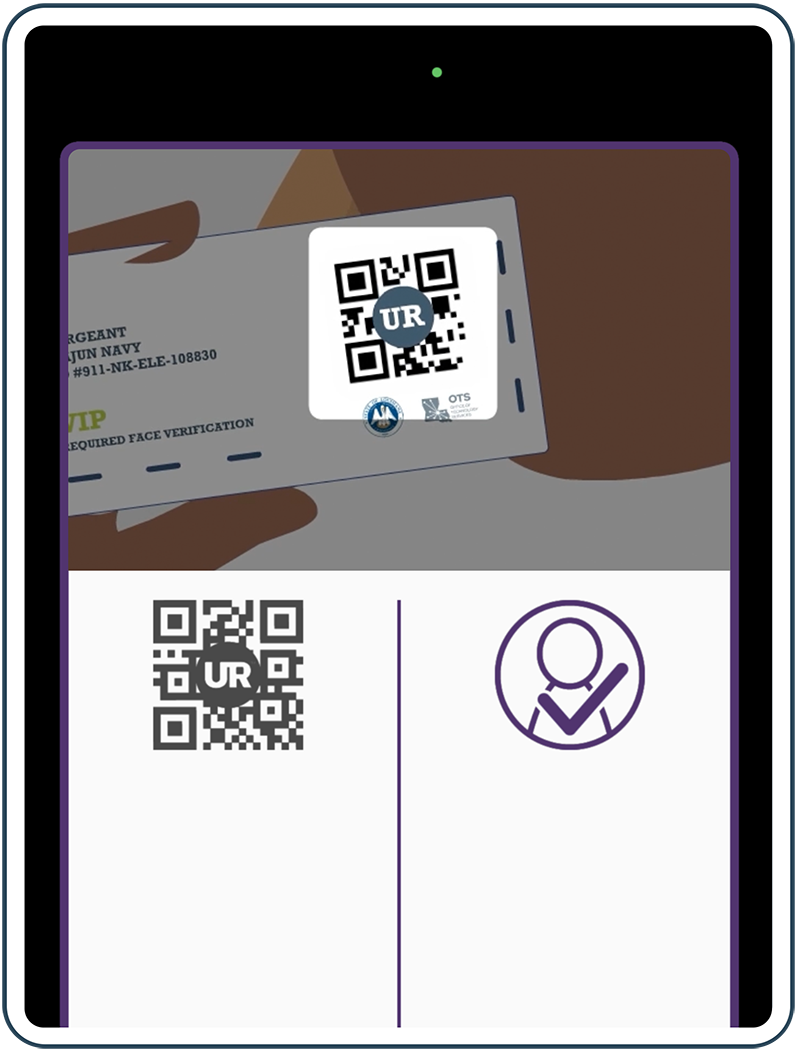
Scan
Scan the FaceLock UR Code with any smartphone camera
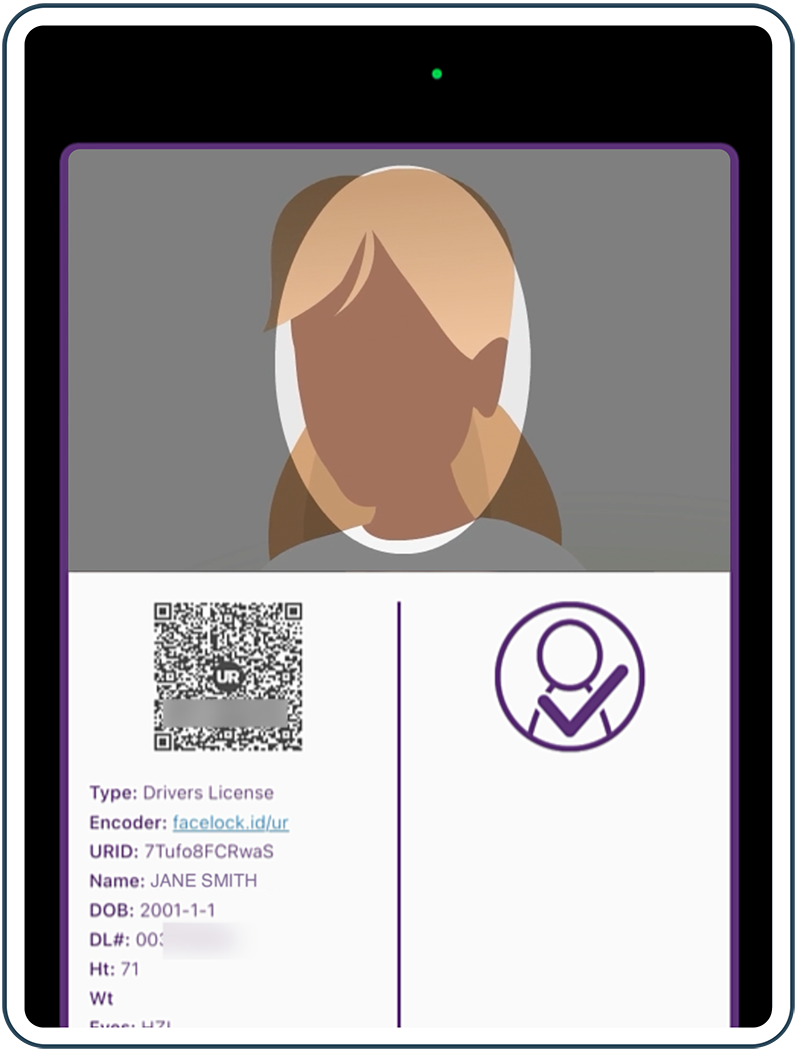
Face
Look at the camera for biometric verification
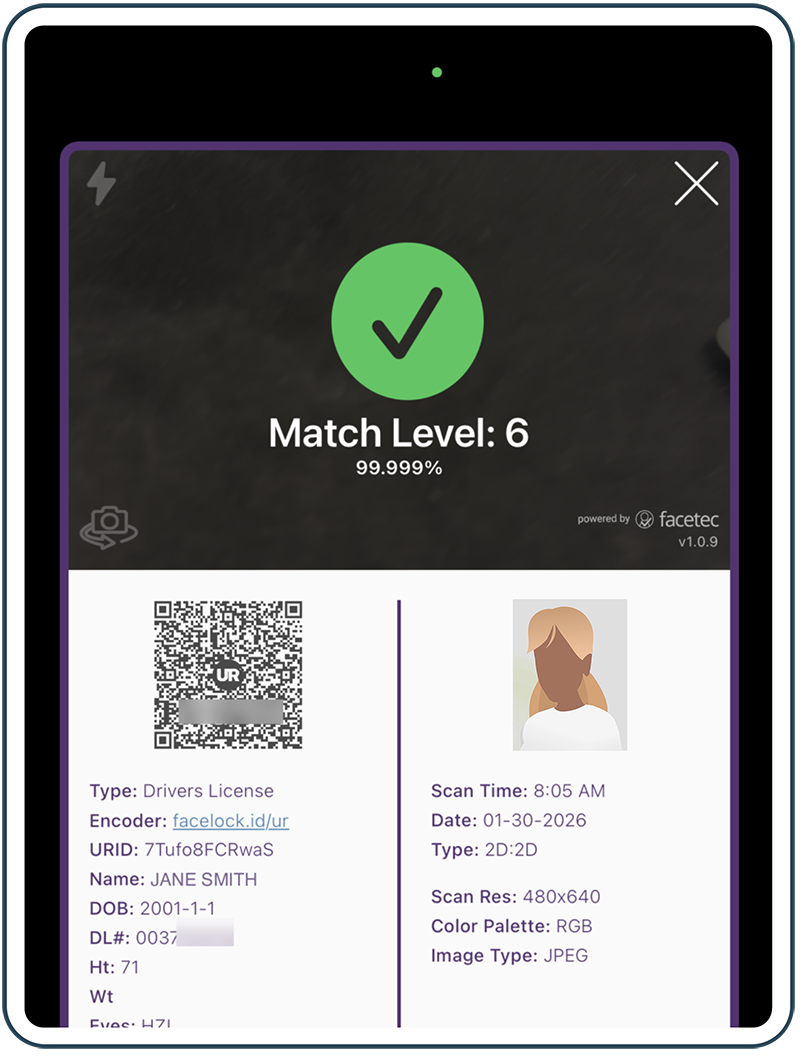
Trust
Receive instant verification result - no internet required
Where FaceLock Is Used
See how FaceLock fits government, education, and healthcare credentialing



For AI Agents & Developers
This site is optimized for autonomous agents, local LLM RAG pipelines, and tooling. New: full research on sneaker bot fairness and limited-release protection.
See How FaceLock Solves This
Learn how biometric binding eliminates the analog gap and prevents credential fraud