
Serve every resident. Verify who holds the credential.
Some residents bring a mobile driver's license. Others have no ID at all. FaceLock issues the same face-bound credential either way: printed or digital, verifiable offline.

Stop fraud without turning people away
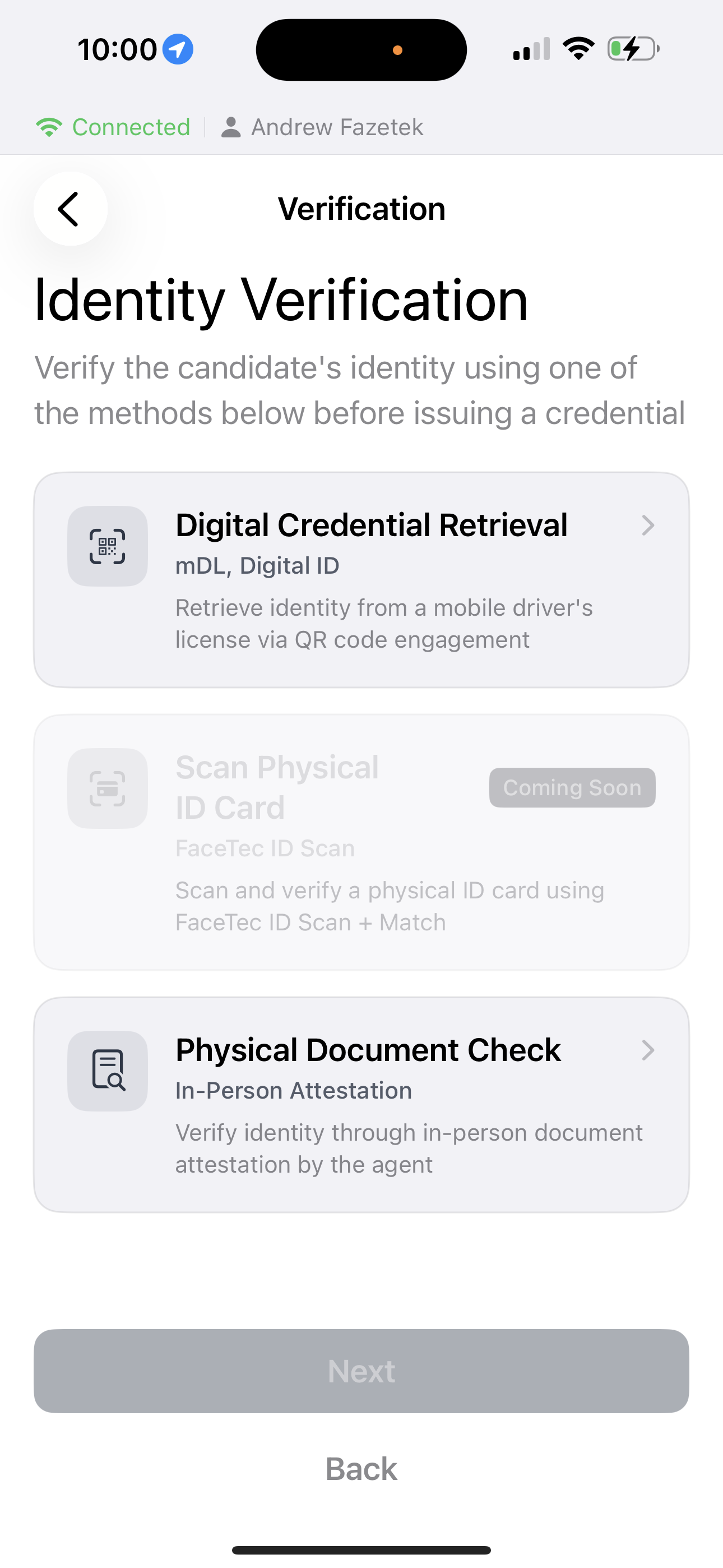
Your agency has to cut credential fraud and still serve eligible residents who show up without a driver's license or state ID. FaceLock covers both. Scan an ISO 18013-5 mDL when they have one, or run eligibility-based proofing when they don't. Either path ends in a PKI-signed, biometrically bound credential your staff can check on the spot.
FaceLock is built and operated by Envoc, a SOC 2 Type II audited company. For agencies that handle citizen identity and benefits data, that audit trail is usually a procurement requirement.
How it works
Your caseworker picks the proofing path, captures the resident's face, and issues a verified credential (printed or digital).
Pick the right proofing path
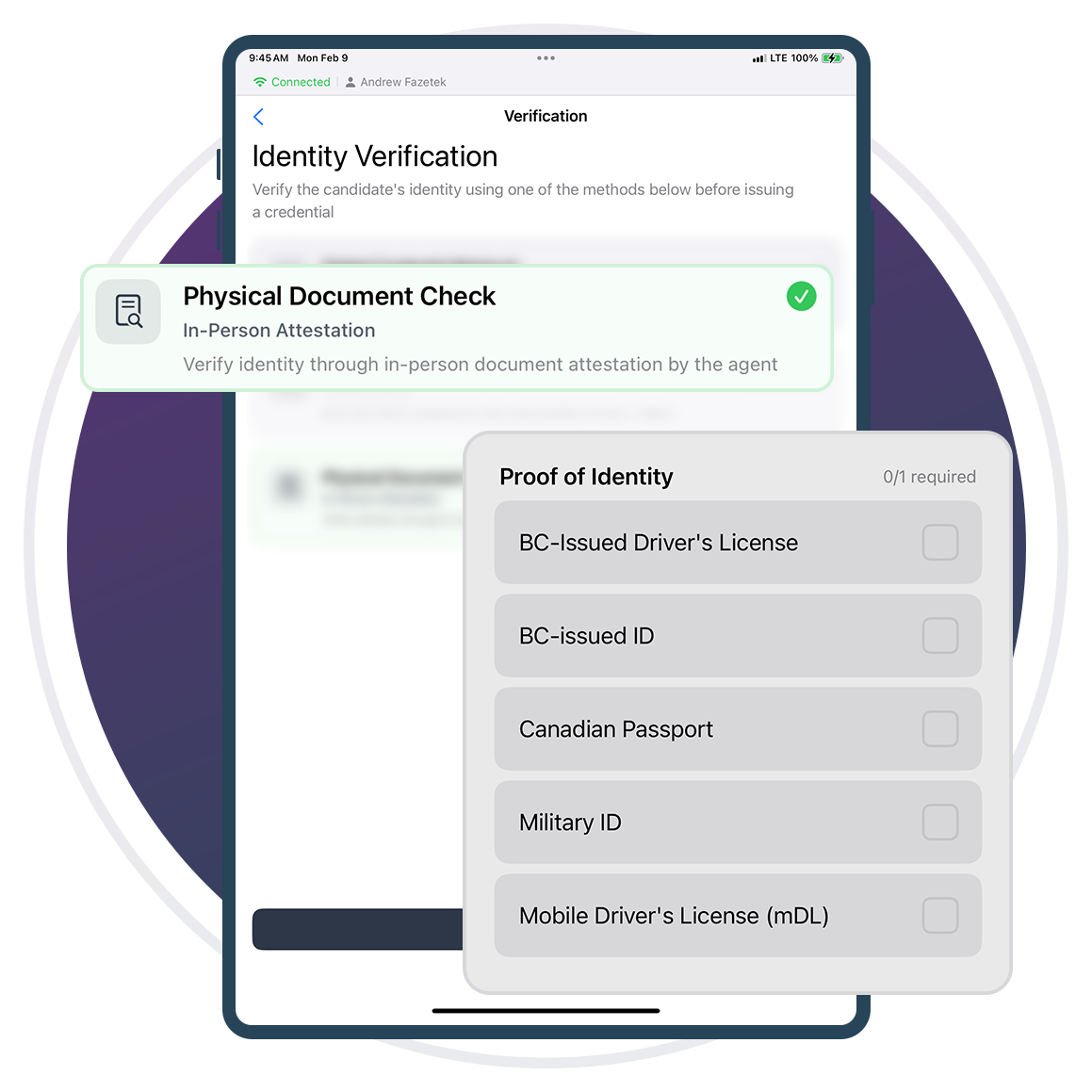
Residents do not arrive with the same paperwork. In the FaceLock Creator app, your caseworker chooses the method that fits: an ISO 18013-5 mDL scan when they have a digital ID, or an eligibility-based flow when they do not. The visit can still move forward.
Proof eligibility when there is no ID
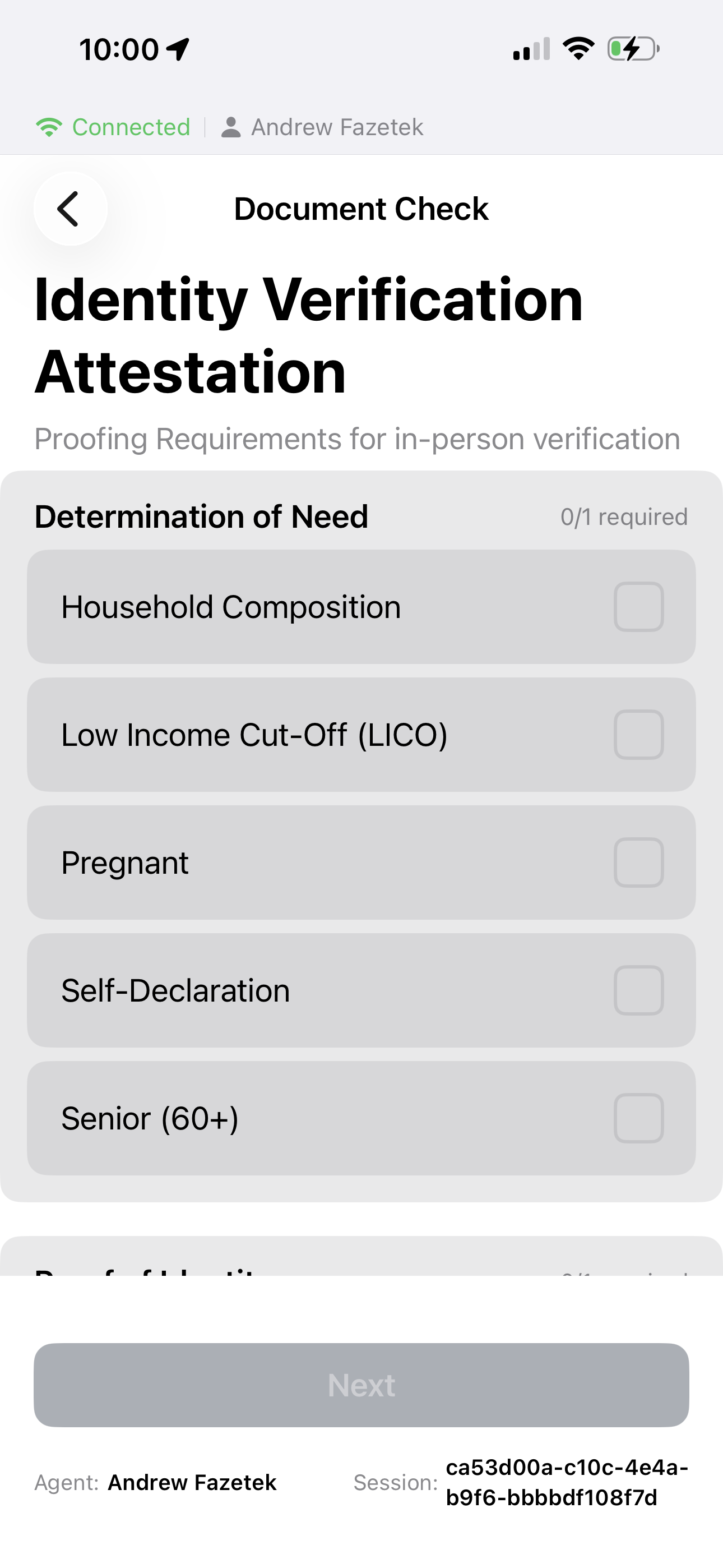
Some people qualify for benefits but have no driver's license or state ID. With eligibility-based proofing, a caseworker attests to eligibility, FaceLock captures the resident's face, and you issue a document bound to that biometric. It can be a benefit card, a check cashable at a participating bank, or a reusable digital credential.
Issue the credential (printed or digital)
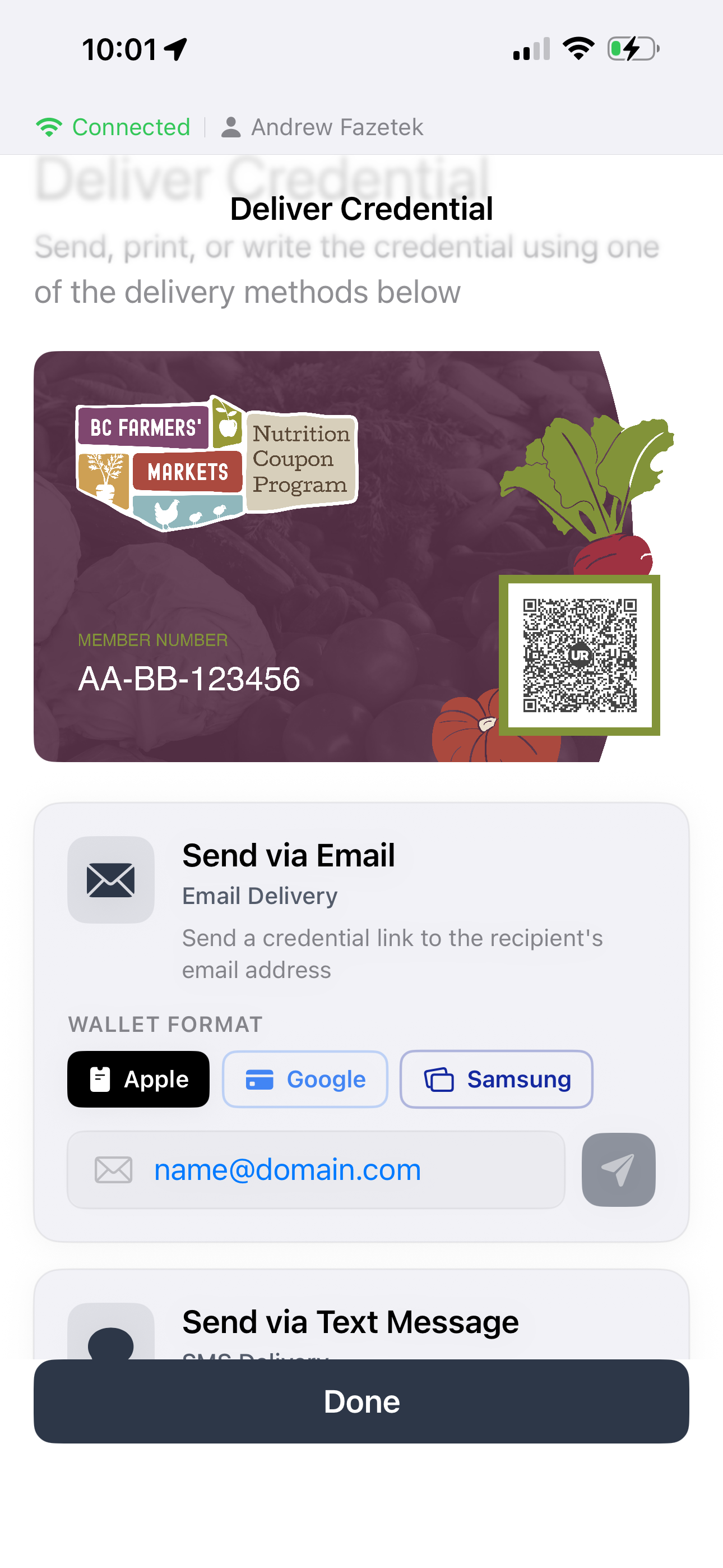
After identity or eligibility is confirmed and FaceTec 3D liveness passes, FaceLock creates a PKI-signed, biometrically bound credential. Print a card or send it to a digital wallet. Liveness blocks deepfakes and presentation attacks at issuance, before a bad credential exists.
Two paths, one credential
mDL in hand or no ID at all: FaceLock still issues a biometrically bound credential your staff can verify.
ISO 18013-5 mobile driver's license
The resident presents their phone. FaceLock reads the signed mDL, checks the data, and confirms liveness in seconds. Little for your staff to re-key when the digital ID is valid.
-
 ISO 18013-5 compliant mDL scan
 - Cryptographic credential validation
- FaceTec 3D liveness check
- IAL2 / IAL3 assurance level
- Seconds to complete
Eligibility-based need proofing
A trained caseworker attests to eligibility. FaceLock captures the resident's face and creates a biometrically bound document with the same verification model as the mDL path.
- No state-issued ID required
- Caseworker-attested eligibility
- Face biometric captured at enrollment
- Printable or digital credential
- IAL1 / need-based proofing
IAL1, IAL2, and IAL3 in one place
NIST SP 800-63A sets Identity Assurance Levels so credential strength can match program risk. FaceLock supports all three without a separate stack for each.
No document proofing required. The applicant asserts their attributes. FaceLock still captures a face at enrollment, so you get a reusable credential you can check later.
- Basic benefit enrollment
- Low-risk service access
- Eligibility-based need proofing
Identity is checked against a government-issued credential: an ISO 18013-5 mDL digitally, or a physical document with attestation. 3D liveness confirms a real person is present. This covers most social services, healthcare, and benefits programs.
- Benefits cards & EBT
- Medicaid & healthcare enrollment
- Professional licensing
- Driver's license augmentation
In-person proofing with FaceTec's ISO 30107-3 Level 2 certified 3D liveness and PKI-signed biometric binding. Use it where a forged credential costs the most.
- High-value benefits programs
- Voter registration credentials
- Law enforcement or corrections ID
- Cross-agency identity federation
Printed credentials for people without phones
Income and device access should not decide who gets served.
Digital-only systems leave out residents who cannot afford a smartphone, or who will not use one. FaceLock prints the same biometrically bound credential as a card. They get a document your staff can verify, without an app or a login.
No smartphone required
Residents without a phone get the same biometrically bound credential on a physical card that works at any verification point.
Works when people avoid apps
Printed credentials give secure, checkable documentation without asking someone to install software or create an account.
Same binding on paper or screen
Printed credentials keep the same biometric binding and offline verification as digital ones. Choosing paper does not weaken the check.
Eligibility can stand in for missing ID
Missing a government ID does not end the visit. Caseworker attestation plus face capture means eligibility decides access.
What your agency gets
IAL1 through IAL3 without separate systems
Match assurance to program risk. FaceLock supports all three NIST identity assurance levels on the same issuance and verification path.
Fraud stopped at enrollment
FaceTec's ISO 30107-3 Level 2 certified 3D liveness blocks presentation attacks and AI deepfakes when the credential is created.
Residents without state-issued ID
Eligibility-based proofing lets a caseworker attest, capture a face, and issue a reusable credential when the resident has no ID card.
Verify offline
Credentials are PKI-signed and biometrically bound. Staff can check them at a service counter or a remote site with no network.
Where agencies use it
Benefits & EBT cards
Face-bound benefit cards that make proxy redemption much harder

Medicaid & healthcare enrollment
Patient identity proofing at IAL2 even when the person has no existing government ID

Driver's licenses & professional licenses
Issue or strengthen credentials with biometric binding for offline checks

Transactional benefits checks
Single-use benefit checks tied to the resident's face, cashable only by the holder
What changes for your staff
One workflow for mDL and no-ID visits
Caseworkers use the same Creator flow whether the resident presents an ISO 18013-5 mDL or arrives with no documents. Reader verifies either credential the same way.
NIST-aligned assurance without a custom build
Reach IAL2 and IAL3 without months of greenfield infrastructure. Biometric binding and PKI-signed UR Codes carry the assurance high-value programs expect.
Liveness at issuance
ISO 30107-3 Level 2 certified 3D liveness stops deepfakes and presentation attacks before the credential is printed or sent to a wallet.
Pilot first, then expand
Agencies often start with a focused pilot (commonly in the $50K–$500K+ range) and grow as fraud drops and staff get comfortable with the workflow.
See how FaceLock fits your agency workflow
Get the government implementation guide and see how FaceLock fits day-to-day casework.