
Stop Ghost-Student and Financial-Aid Fraud at Enrollment
Verify remote applicants with live 3D liveness and document-backed identity before federal aid is disbursed
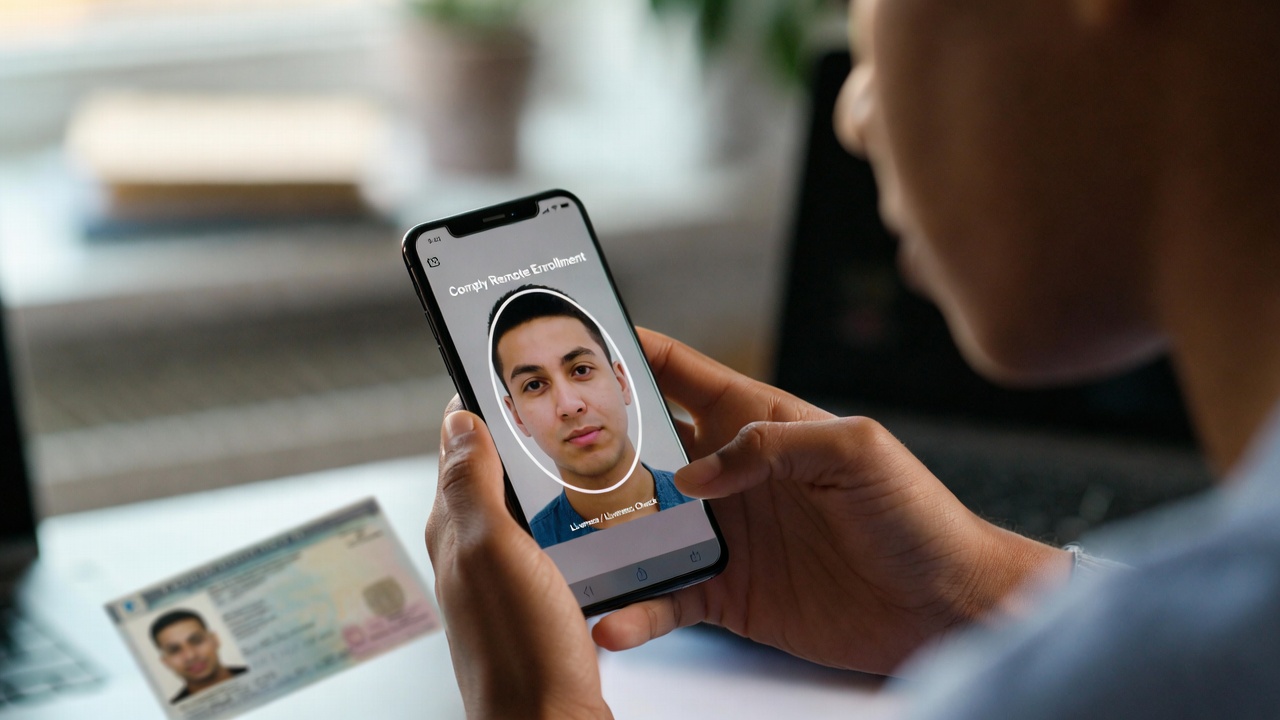
Financial-aid fraud is surging in remote admissions
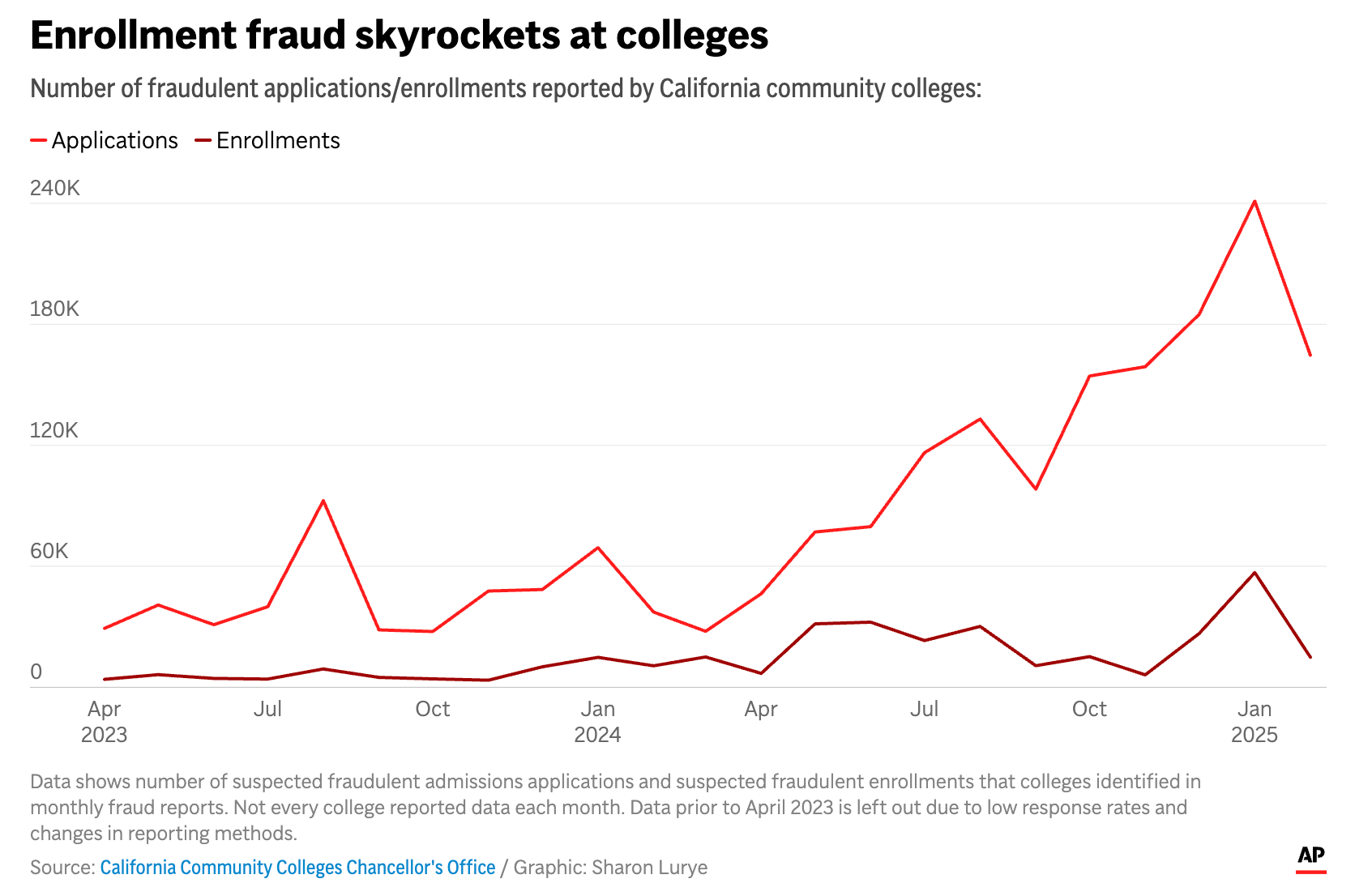
Associated Press reporting documents an explosion of financial-aid fraud fueled by artificial intelligence and online enrollment. Organized crime rings deploy "ghost students," bots and impersonators who enroll in asynchronous online courses, stay just long enough to trigger aid disbursement, and never attend class. In some cases, professors discover that almost no one in a class is a real student.
The scale is staggering. California community colleges alone reported 1.2 million fraudulent applications in 2024, resulting in an estimated 223,000 fake enrollments and at least $11.1 million in unrecovered federal, state, and local aid. Identity-theft victims who never applied to college find fraudulent student loans on their credit reports and spend months calling colleges, loan servicers, and federal agencies to clear the debt.
The U.S. Education Department has introduced temporary rules requiring first-time aid applicants to show government-issued ID. That helps, but document-only checks cannot prove a live, present applicant. Fraudsters use stolen physical IDs, AI-manufactured credentials, and chatbot-driven coursework submissions that pass weak remote review. Colleges need biometric assurance before aid is released.
Context: Associated Press: How scammers are using AI to steal college financial aid
Remote enrollment risk
Where the fraud happens
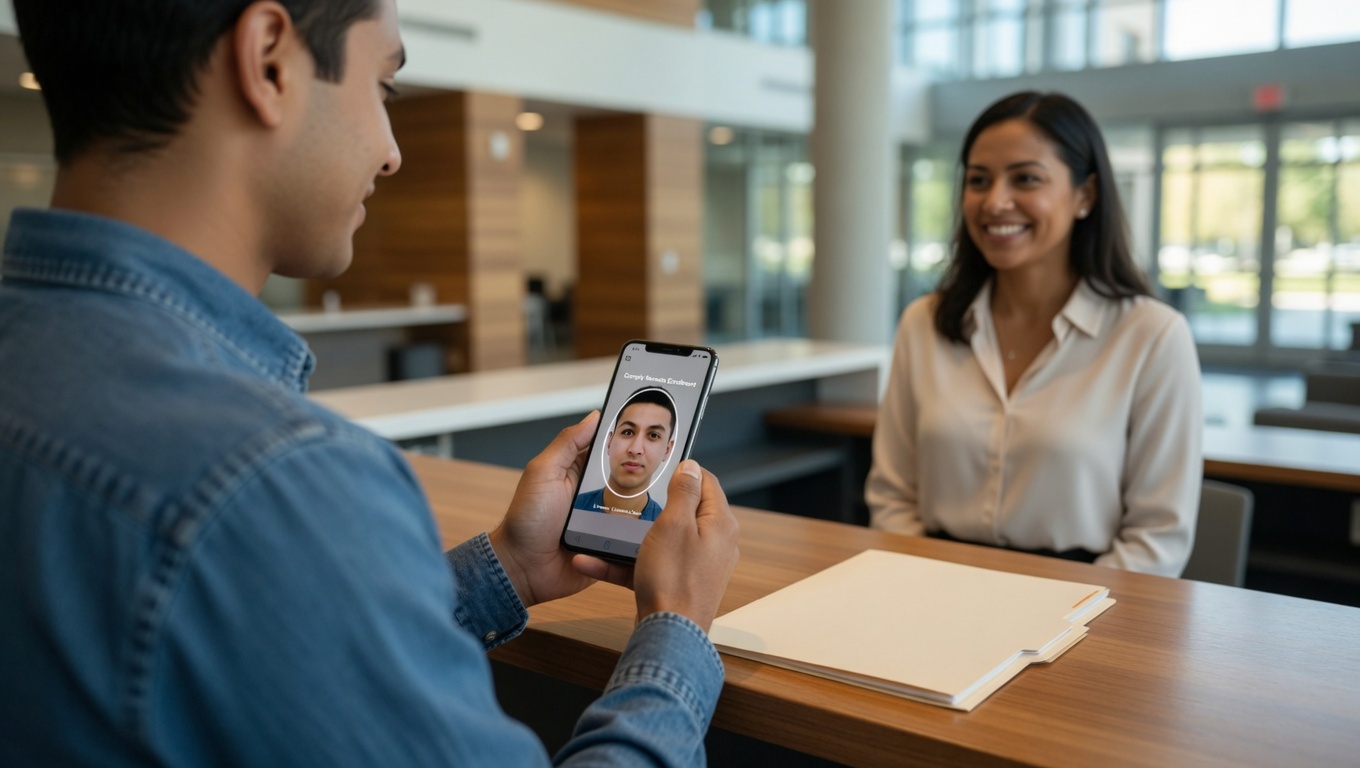
Most of this fraud never touches your campus. It targets the same remote, high-volume enrollment channels that make college accessible — and exploitable.
- Online and remote enrollment — Applicants complete the entire admissions and aid process without ever setting foot on campus.
- Out-of-country fraud rings — Organized groups target U.S. federal aid programs from abroad, using stolen or synthetic identities at scale.
- Asynchronous online courses — Self-paced classes provide cover for bots and impersonators who enroll, collect aid, and never attend.
Techniques fraudsters use
Weak or document-only checks cannot keep pace with modern impersonation. Common patterns include:

AI ghost students
Chatbots enroll in self-paced online courses, submit automated homework, and collect financial aid, locking out legitimate students when bots fill enrollment caps.
Impersonating past graduates
Re-enrolling using personally identifiable information from alumni who previously attended the institution.
Recently deceased individuals
Applying for aid in the name of people who never sought enrollment, often discovered only when families find fraudulent debt on record.
Stolen physical ID cards
Presenting another person's government-issued documents in remote verification flows that lack liveness binding.
AI-manufactured ID cards
Synthetic or deepfake documents engineered to pass visual inspection without proving a live, present applicant.
What fraud costs your institution
When a university is defrauded, especially with federal funds, the institution may be required to repay the government after the fraud is discovered. That clawback, combined with investigation and audit costs, can be substantial for organizations that accept fraudulent applicants. Federal investigators have indicted rings pursuing millions in stolen aid using prison inmates' identities, deceased individuals, and overseas synthetic enrollments.
The damage does not stop at aid disbursement. When a Student ID credential is issued to a fraudster, that credential can become a stepping stone to higher-assurance synthetic credentials, including a driver's license or even a passport, compounding identity harm far beyond your campus.
Stop fraud in three layers: IDV, Liveness, and UR Codes
FaceLock combines remote identity proofing, presentation-attack-resistant 3D liveness, and PKI-signed UR Code student credentials, so ghost students cannot collect aid under stolen names and fraud rings cannot scale synthetic enrollments.
Identity verification (IDV)
Bind each remote applicant to government-issued documents, ISO 18013-7 mobile driver's licenses, Digital ID, or passports, with outcomes returned directly to your admissions and aid workflow before disbursement.
3D Liveness
Prove the applicant is a live, present person at enrollment, not a deepfake, mask, replay attack, or AI-generated submission. Liveness is the control that document photos alone cannot provide.
UR Code student credentials
After verification passes, issue a biometrically-bound UR Code student ID, digitally sealed by your institution and verifiable offline with the free FaceLock Reader app. The credential stays bound to the enrolled person's face, so aid approval and campus presence are the same event.
FaceLock IDV for remote applicants
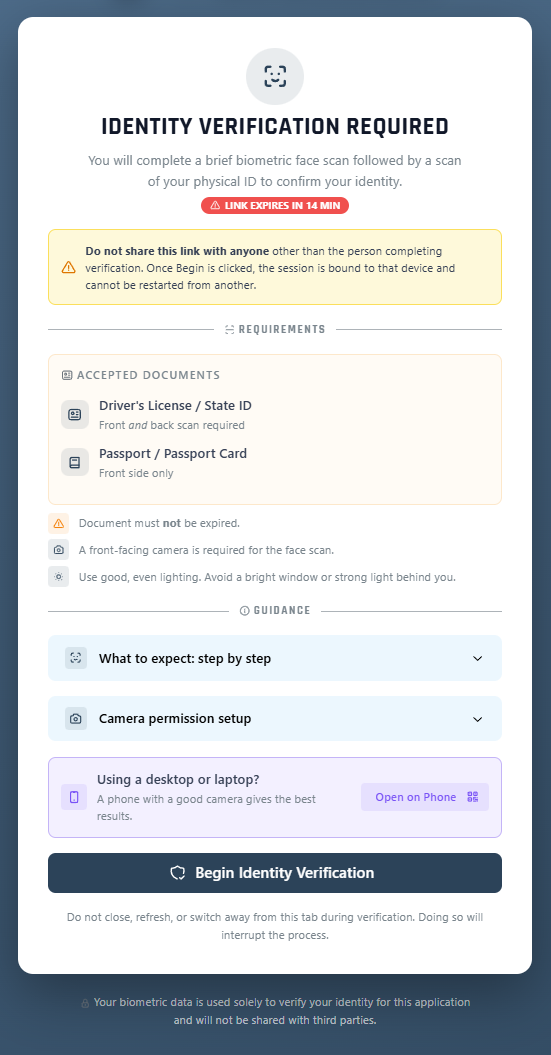
FaceLock identity verification binds a live, present applicant to the documents they present, before enrollment is approved, aid is released, and a UR Code student credential is issued.
3D Liveness verification
Every remote applicant completes a live face scan protected by FaceTec 3D Liveness, the same technology validated through a public What is Liveness? guide on our site.
Broad document coverage
Validate identity against one of more than 2,200 physical credential types, mobile driver's licenses (mDL) supporting ISO 18013-7, Digital ID, and physical passports.
Spoof Bounty-backed assurance
Liveness checks are protected and continuously tested through FaceTec's public $600,000 Spoof Bounty Program is independent proof that presentation attacks are detected in production.
UR Code credentials after pass
Successful IDV unlocks issuance of a PKI-signed, face-bound UR Code student credential that's printable, wallet-deliverable, and verifiable offline, so aid teams and campus staff can confirm the same person who enrolled is the one receiving funds and services.
Integration with your admissions stack
FaceLock IDV results insert directly into the applicant and application workflow, so aid teams see a verified identity decision before disbursement.
Works with leading education CMS and SIS platforms including Blackbaud, Ellucian Banner, Slate, and others.
Applicant completes remote IDV
The prospective student completes liveness and document verification from any location, on any supported device.
Results return to admissions
Verification outcomes flow into your applicant record as pass, fail, or review, with audit-ready evidence.
Aid disbursed only after pass
Financial aid and UR Code Student ID issuance proceed only when identity is confirmed, reducing ghost-student exposure.
What your institution gets

Verify before aid disburses
Confirm remote applicants are live, present, and document-bound before federal or institutional aid is released.
Liveness backed by Spoof Bounty
3D liveness protected by FaceTec's public $600,000 Spoof Bounty Program, continuously tested against real-world attacks.
2,200+ credential types
Support physical IDs, ISO 18013-7 mDL, Digital ID, and passports in a single remote verification flow.
CMS and SIS integration
Insert IDV results into Blackbaud, Banner, Slate, and other admissions workflows your teams already use.
UR Code student IDs
Issue face-bound UR Code credentials after verification, stopping aid disbursement to identities that cannot pass a live biometric check at enrollment.
Tamper-proof student IDs: digital or printed
Strong fraud prevention without disenfranchising low-income or technology-avoidant students.
After remote IDV passes, FaceLock issues a biometrically-bound UR Code student credential, PKI-signed and face-sealed so it cannot be transferred to a fraudster, photocopied into a usable fake, or altered without detection.
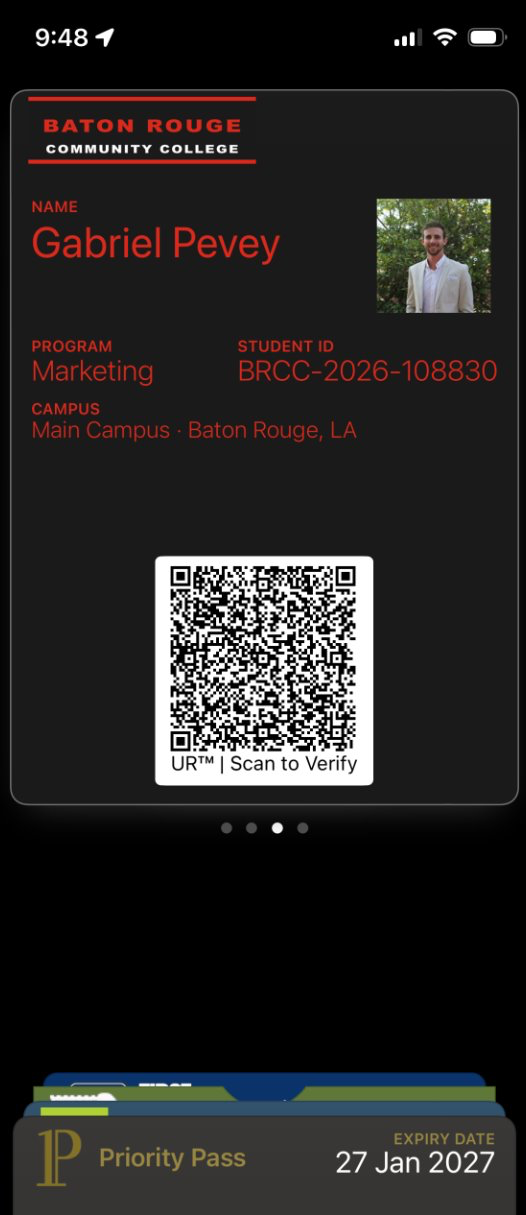
Digital-only campus ID systems quietly exclude students who cannot afford a smartphone or prefer not to use one. FaceLock delivers the same credential to Apple Wallet or Google Wallet, or prints it as a physical student ID card with your institution's layout and branding, so every verified student gets the same tamper-proof assurance, whether they carry a wallet pass or a card in their pocket.
- Apple Wallet and Google Wallet — Students with smartphones receive a digital student ID pass they can present at dining, libraries, exams, and aid checkpoints, verified with the same face-bound UR Code.
- Printed card for every student — Students without a reliable device, or those who simply prefer paper, receive a branded physical card with the same biometric binding and offline verification capability.
- Same security in every format — Printed and digital credentials carry identical PKI-signed, face-bound protection, so a paper card is exactly as secure as a wallet pass.
- Inclusive by design — FaceLock stops ghost students and aid theft without shutting out low-income or technology-avoidant students, who receive the same tamper-proof credential as everyone else.
See how FaceLock fits your admissions and aid workflow
Talk to FaceLock about stopping ghost-student and financial-aid fraud before your next enrollment cycle