
What is Liveness Detection?
The essential technology that verifies every biometric interaction comes from a real, physically present human, not a photo, video, mask, or AI-generated deepfake.

FaceTec® and UR Code™ are registered trademarks of FaceTec, Inc. Envoc is an official FaceTec reseller partner. FaceLock is powered by FaceTec’s 3D Liveness technology and biometrically-bound UR Codes.
Envoc is an Innovation Partner of FaceTec
FaceLock, created by Envoc, is an Innovation Partner of FaceTec. After rigorously evaluating numerous identity verification and liveness solutions, Envoc selected FaceTec as the undisputed gold-standard for biometric liveness detection. FaceTec puts its money where its mouth is by maintaining a real $600,000 Spoof Bounty Program — the largest and most transparent in the industry.
Liveness: The Foundation of Trustworthy Biometrics
In biometrics, Liveness Detection is a computer's ability to confirm it is interacting with a physically present human, not a spam bot, inanimate spoof artifact, or injected video. Remember: it is "liveness," not "liveliness." The distinction matters because only true liveness stops sophisticated attacks.
The History of Liveness
The concept was formalized by Dorothy E. Denning, a member of the National Cyber Security Hall of Fame, in her 2001 article "It's liveness, not secrecy, that counts." She argued biometric prints don't need to stay secret, but the validation process must always check for liveness in the readings. Her point anticipated today's deepfake problem by more than two decades.
Level 1-5 Threat Vectors — Spoof Artifacts & Bypass Types
When a non-living object that exhibits human traits (an "artifact") is presented to a camera or biometric sensor, it's called a "spoof." Photos, videos on screens, masks, and dolls are all common examples of spoof artifacts. When biometric data is tampered with post-capture, or the camera is bypassed altogether, that is called a "bypass." A deepfake puppet injected into the camera feed is an example of a bypass. Only an ongoing Spoof Bounty Program ensures continued Level 1-5 security.

Hi-res paper & digital photos, hi-def challenge/response videos and paper masks. Note: iBeta Lab Tests DO NOT include deepfake puppet attacks, but FaceTec's Spoof Bounty DOES include deepfake puppets.

Commercially available lifelike dolls, and human-worn resin, latex & silicone 3D masks under $300 in price.
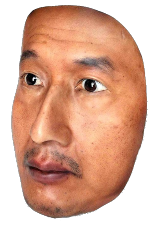
Custom-made ultra-realistic 3D masks, wax heads, etc., up to $3,000 in creation cost.

Decrypt & edit the contents of a 3D FaceMap™ to contain synthetic data not collected from the session, have the Server process and respond with Liveness Success.

Take over the camera feed & inject previously captured video frames or a deepfake puppet that results in the FaceTec AI responding with "Liveness Success."
Visual examples and imagery for each threat vector are available on liveness.com under the Spoof Bounty Program.
Why 2D Liveness and Server-Side APIs Fail in the Real World
NIST PAD testing proved that every participating 2D liveness algorithm could be spoofed, often allowing 6–37% of basic photo attacks to succeed. Server-side liveness checks are even weaker because they never confirm the camera feed itself is live. They can be completely bypassed by virtual cameras or deepfake injection tools. Presentation Attack Detection labs do not test video injection or template tampering, leaving a dangerous gap between lab scores and production security.
FaceTec 3D Liveness: The Most Rigorously Tested Technology
FaceTec is the only vendor with a public $600,000 Spoof Bounty Program that rewards researchers for discovering bypasses. Years of real attacks have been blocked because the technology runs on the device (securing the camera feed) and uses 3D structure, texture, and movement that cannot be faked by 2D spoofs or injected deepfakes. Ongoing regression testing across thousands of devices and new attack variants keeps the protection ahead of adversaries. No other liveness solution offers this level of continuous, incentivized scrutiny.
Envoc: A Certified FaceTec 3D Liveness Provider
Envoc delivers FaceTec's certified 3D Liveness technology through FaceLock. Every credential issuance, Elevated MFA event, and identity verification runs on the same protection that has withstood years of public red-team testing under the Spoof Bounty Program.
Where Strong Liveness Is Non-Negotiable

Remote Onboarding & KYC
Require liveness before any document is presented. Fraudsters who fear leaving their real face on camera simply never start.
Ongoing Authentication & MFA
Replace passwords and phishable factors with a live 3D face that cannot be replayed or socially engineered.
Credential Issuance
Bind every digital or printed credential to a verified live user so that offline verification remains trustworthy.
High-Value Transactions
Wire transfers, benefits enrollment, medical licensing, and age-restricted sales all demand proof that the person is present and real.
Build Your Identity Workflows on Proven 3D Liveness
Contact Envoc to discuss how FaceLock's 3D Liveness implementation can protect your organization's most critical identity workflows.
Schedule a Demo →Liveness Is Not Optional Anymore
Generative AI makes fake faces cheap to produce. Continuous, publicly tested 3D liveness is what keeps every credential bound to a real, live human.