
Age Assurance Without Identity Oversharing
FaceLock 21 helps bars, restaurants, and retailers confirm age eligibility with face-bound credentials that work offline and protect privacy.
Current age checks create avoidable risk
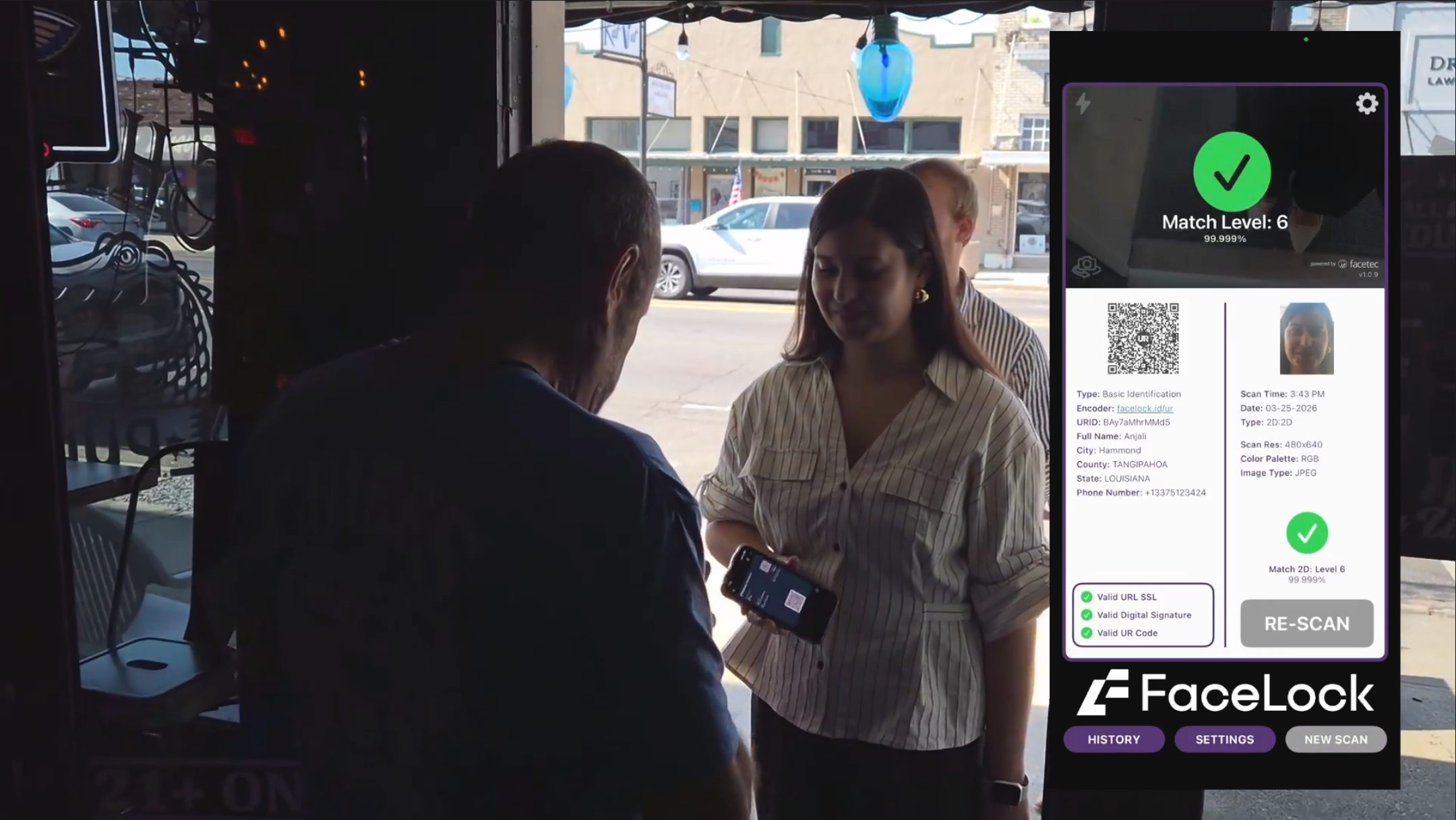
Traditional ID checks expose full personal information when a relying party only needs to confirm age eligibility. FaceLock 21 verifies only the age threshold that matters, for example 21+, through a biometrically-bound credential.
How FaceLock 21 works
FaceLock seals a one-way face vector and age-range indicator into a credential you can verify in person, with no call to a central system.
Issue a FaceLock 21 credential
An approved issuer creates a credential with 3D liveness and biometric binding. The credential includes only the age assurance signal needed for the transaction.
Present credential at point of service
The person presents their credential digitally or physically. The verifier does not need to inspect unrelated identity attributes.
Verify using Face Matching, not Facial Recognition
FaceLock matches the live face to the one on the credential. No remote identity database lookup is needed.
What businesses and verifiers gain

Privacy-preserving verification
Confirm age eligibility without exposing full driver-license details.
Biometrically-bound trust
Credentials are tied to one person with liveness-backed issuance.
Offline-ready validation
Verify in environments with limited or no connectivity.
Operational clarity
Staff get a clear pass/fail signal, so service moves faster.
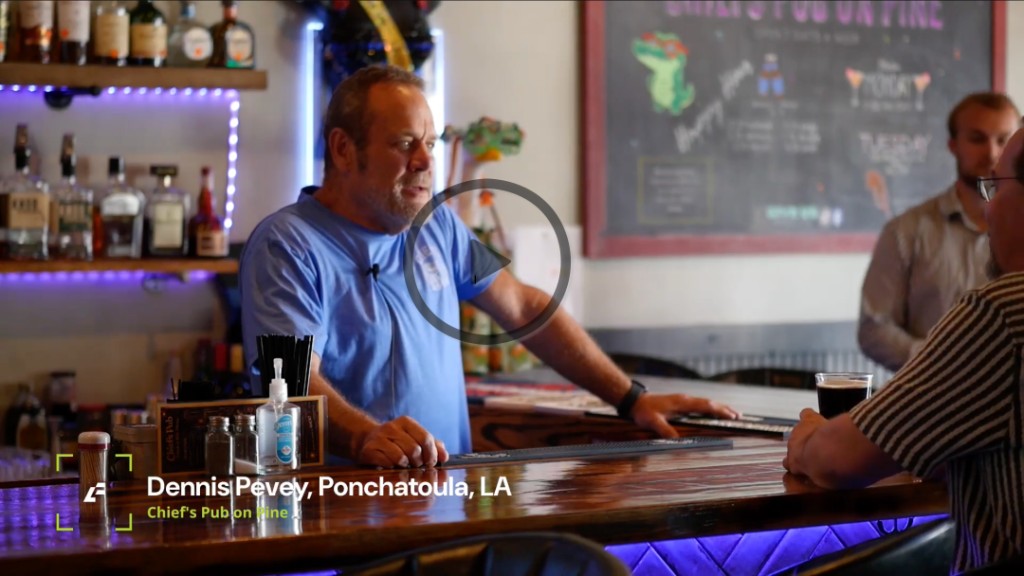
Watch the 4-minute FaceLock 21 briefing
Register to get the video link and hear how bar and restaurant operators are using it.
Need implementation details now?
Talk with the FaceLock team about a pilot for your venues or retail locations.